


Virago: Herstory
4.3655.00 Reviews
App Specs
- Version
- 120
- Updated On
- License
- Free
- Downloads
- 1,000,000+
- Developer
- Honest Chronicle
- Categories
- Adventure
- Platform
- Android
Screenshots
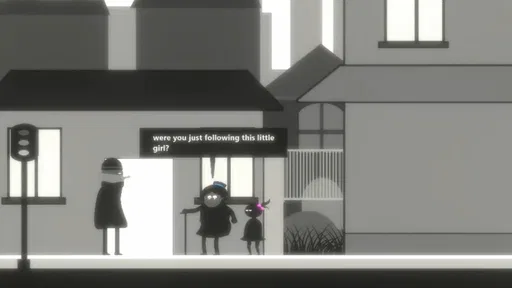
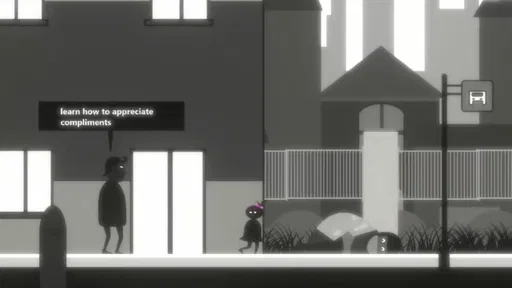
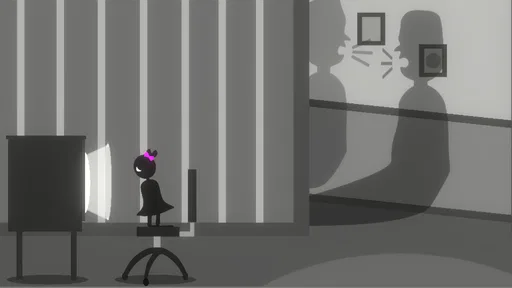
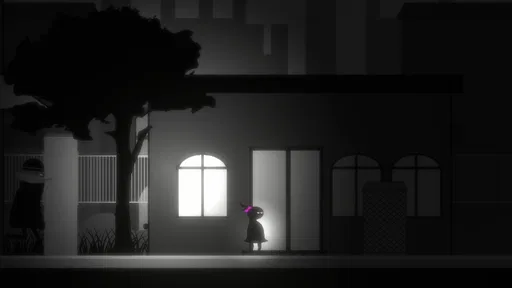
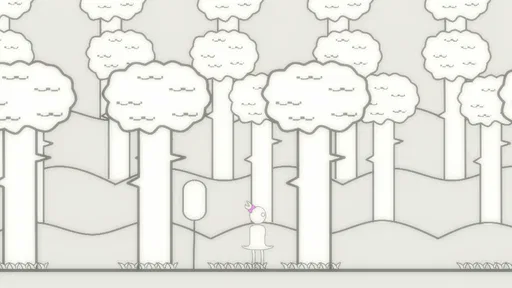
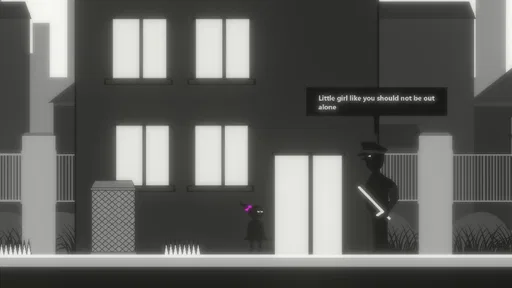
 Analysis by AppCompare
Virago: Herstory is the kind of adventure game I would suggest to someone who wants to explore rather than rush through a checklist. I spent time with it as a mobile player, paying attention not only to its broad connected world but also to how it fits into ordinary phone use: short sessions, interruptions, changing attention, and the temptation to spend money. My overall impression is positive, but it is not a universal recommendation. Its appeal depends heavily on whether you enjoy discovering a world at your own pace and accepting some friction along the way.
Developed by Honest Chronicle, the game places its adventure in a sprawling world where areas feel related instead of being isolated stages. That structure is important because it changes how I approached progress. I was not simply moving from one self-contained level to the next; I was building a mental picture of a larger place and deciding where to go when several possibilities competed for my attention. For me, that gave the experience more personality than a straightforward sequence of missions.
How the free model affects the experience
The game is free to download and play, which makes trying it relatively easy. There is no upfront purchase standing between curiosity and the first session. That matters with a slower adventure, because the central question is not whether the opening looks attractive in a few minutes, but whether the world and its storytelling style are strong enough to keep pulling you back. I appreciate being able to answer that question personally before committing money.
There are optional in-app purchases ranging from $1.99 to $99.99 per item. I treat that range as a reason to stay deliberate rather than as an automatic criticism. Free access has real value, especially for players who only want to explore casually, but the presence of purchases means I would not approach the game with the assumption that every part of the long-term experience has the same cost structure as a premium title. The sensible habit is to decide in advance whether you are playing entirely for free or whether you are comfortable spending, instead of making small impulse purchases whenever progress feels slow.
That distinction also helps compare it with the usual alternatives. A paid adventure game often gives me a clearer sense of the total commitment at the start, while a free game lets me test the atmosphere without risk but may ask for more patience around its commercial design. Virago: Herstory sits on the second side of that comparison. Its strongest financial advantage is the ability to sample the world without an entry fee; its main trade-off is that I have to manage my own spending expectations.
The age rating is Everyone, so the game is positioned for a broad audience rather than a narrowly adult one. I still think parents should look at the purchase settings on the device before handing it to a child, simply because free access and optional purchases can coexist. That is practical preparation, not a judgment on the adventure itself.
A world that rewards a personal route
The most convincing part of the experience is the interconnected setting. I enjoyed the feeling that a decision about where to travel could change what I noticed next, even when I was not trying to optimize anything. In a more conventional mobile adventure, I often follow the brightest marker and forget the surrounding space. Here, I found myself pausing to consider whether a detour might be more interesting than the obvious direction.
Worth Reading Before You Choose

EA SPORTS FC Mobile 26 Is a Bigger Football Game, but It Takes Time

Flipboard Shows What News Apps Must Do Beyond the Feed

Switching to Android Auto Means Rethinking Your Driving Routine

Google Calendar Makes a Crowded Week Easier to Manage

Ludo King Makes the Most of the Minutes Between Plans

Baby Panda World Brings Quick Play to Modern Phones, but Its Game Library Feels Busy
That makes the game especially suitable for players who enjoy piecing together a place through movement and observation. I would not describe it as ideal for someone who wants constant action or a tightly controlled sequence of dramatic set pieces. Its appeal comes from curiosity. The reward is less about clearing a level as quickly as possible and more about understanding how separate discoveries fit into a wider journey.
One useful way to play is to keep a simple note of locations, unresolved clues, or questions that come to mind. I found that this helped when returning after a break, because an interconnected world can be harder to re-enter than a set of independent stages. A quick personal record turns uncertainty into a reason to continue instead of making the next session feel like a memory test.
I also recommend resisting the urge to pursue every visible objective immediately. When a game offers a broad environment, following the first available instruction can hide the pleasure of wandering. I had a better time when I allowed myself to investigate something that looked interesting, even if it was not the most efficient route. This is one of the less obvious strengths of the design: the world works best when treated as a place to learn, not merely as a map between rewards.
What daily play feels like
A realistic use case is a short evening session after work or school. I might have only enough attention for a modest stretch of exploration, and the free entry makes it easy to open the game without feeling that every minute must justify a purchase. In that situation, the broad setting is an advantage because I can choose a small goal: revisit a location, investigate one direction, or continue a thread that I remember clearly.
At the same time, the same structure can make brief sessions feel incomplete. If I stop just as I am beginning to understand a new area, the next session may require a little reorientation. That is why I would not recommend playing while distracted by several other tasks. The game benefits from a few uninterrupted minutes of attention, even if the overall session is short.
For travel or unreliable connectivity, I would make the decision based on the exact device behavior you observe rather than assuming every part of the game works the same way offline. The important practical point is to test it before relying on it during a flight, commute, or remote trip. I would also leave storage and battery room for normal mobile use, because a large adventure world is less comfortable when the phone is already struggling with other apps.
Controls and presentation are another area where expectations matter. On a phone, exploration can feel intimate and convenient, but touch input is not always as precise or comfortable as a controller. I preferred playing when I was settled rather than walking or holding the phone awkwardly. Someone who wants console-like control may find a traditional platform more satisfying, while a mobile player who values accessibility and quick availability will probably accept the compromise.
Where the free experience asks for patience
The biggest limitation is not that the game is free; it is that free-to-play expectations can influence how I judge pacing. In a paid adventure, I usually expect a direct relationship between my time and the next piece of content. In a free game with purchases, I pay closer attention to whether progress feels naturally paced or whether I am being encouraged to spend to remove friction. I would not make a purchase simply because I felt impatient.
This is also why I recommend deciding on a personal rule before playing. For example, I might finish the early portion without spending anything, then ask whether the experience is enjoyable on its own. If the answer is yes, any later purchase should be for genuine appreciation, not because I feel trapped by a bottleneck. That approach keeps the free model from quietly turning into an unplanned expense.
Another trade-off is the scale of the world. A sprawling, connected environment sounds attractive, but size alone does not guarantee that every route will feel equally meaningful. I noticed that broad exploration can sometimes create uncertainty about what deserves attention. Some players will interpret that as freedom; others will see it as a lack of direction. If you prefer clearly signposted objectives and constant confirmation that you are progressing correctly, the game may test your patience.
The same applies to replay habits. I can imagine returning because I want to understand more of the setting, but players who mainly replay games for faster times, increasingly difficult combat, or competitive rankings may not find the same motivation here. The experience is centered on the adventure itself, not on a conventional leaderboard routine.
How it compares with familiar adventure games
Compared with a linear mobile adventure, this game gives me more room to choose my route and form my own interpretation of the setting. The benefit is atmosphere and discovery. The cost is that I have to remember more and accept that the next step may not always be obvious. Linear games are better when I want a dependable sequence; Virago: Herstory is better when I want the world to feel larger than the current objective.
Compared with a premium adventure bought once, the free model lowers the barrier to entry but introduces more uncertainty around spending. A premium alternative may be preferable for someone who wants a clean purchase and no temptation to buy individual items. On the other hand, paying before knowing whether the style suits me can be frustrating. Here, I can test that fit first, which is a meaningful advantage.
Compared with action-heavy adventure games, this one is more appealing to a reflective player. I would choose it when I want to look around, follow connections, and let the setting carry part of the experience. I would skip it in favor of something more immediate when I am specifically looking for rapid combat, short bursts of challenge, or a highly structured mission loop.
Who will get the most from it
I think the best audience is a patient mobile player who enjoys exploration and does not need every objective explained immediately. If you like returning to a game with a few unanswered questions, the interconnected world gives you a reason to continue. It is also a reasonable choice for someone who wants to sample an adventure without paying upfront.
The game can work for families and younger players because its rating is Everyone, but I would still separate age suitability from purchase supervision. A broad age rating does not remove the need to manage optional spending. Setting a device-level purchase safeguard is a sensible step if several people share the phone or tablet.
I would be more cautious recommending it to players who dislike free-to-play economics, even when they can technically play without buying anything. If seeing purchase options makes an otherwise enjoyable game feel compromised, a paid alternative may provide a more comfortable experience. I would also steer highly competitive players elsewhere, since the qualities that stood out to me were world-building and exploration rather than competition.
Device compatibility is relatively approachable: the game supports Android from version 7.1 onward. That opens it to many older devices, but compatibility on paper is not the same as an equally smooth experience on every phone. If your device is aging, I would close background apps, keep the system updated, and test performance during a normal exploration session before deciding whether it deserves a permanent place on your home screen.
What the numbers suggest about its audience
The game has passed one million installs, carries a 4.3 average from about 5.8 thousand ratings, and has 656 written reviews. Those figures suggest that it has reached a substantial mobile audience and that the general response is favorable. I would read them as useful context, not as a substitute for checking whether its slower, exploratory style matches my own preferences.
It first appeared on May 12, 2022, and the current version is 120. I find the version detail useful when troubleshooting: if something behaves unexpectedly, I would first check that the installed build is current before blaming the device or assuming the game is broken. The release history also tells me that this is not a brand-new experiment, so I approach it as an established adventure rather than an untested launch.
My recommendation after weighing the trade-offs
My practical verdict is to try it free first, then decide whether the atmosphere earns any spending. That is the fairest way to judge it because the main value is experiential: exploring a connected world, choosing where to look next, and slowly building a sense of place. If those qualities appeal to you, the absence of an upfront price is a strong reason to give it a chance.
I would skip it if I wanted a completely purchase-free-feeling premium adventure, a tightly guided campaign, or action that stays intense from one minute to the next. I would also avoid spending impulsively just to make a session feel faster. The game is at its best when I let its world set the pace, and that requires accepting some uncertainty rather than trying to force it into a more conventional mobile format.
For me, Virago: Herstory succeeds because it treats adventure as a relationship with a place, not only as a chain of tasks. Honest Chronicle has created a game that is easy to sample, broad enough to invite curiosity, and distinctive enough to stand apart from a purely linear alternative. Its free access is valuable, but its real test is whether you enjoy wandering without constant direction. If you do, this is a worthwhile download; if you need immediate structure and transparent one-time pricing, your money and time may be better spent elsewhere.
Pros
- Short
- accessible lessons make complex feminist history easy to explore.
- Covers diverse women and movements often missing from mainstream history apps.
- Interactive format makes learning feel more engaging than reading a textbook.
- Useful for students
- educators
- and anyone building historical context.
- Encourages critical thinking about gender
- power
- and historical representation.
Cons
- Some topics receive only brief coverage and may feel lacking in depth.
- The strongly feminist focus may not appeal to users seeking broader history content.
- Certain historical references require additional research for full context.
- Reading-heavy sections may feel less engaging for users expecting game-like action.
- Availability of features or content may vary between Android and iOS versions.
FAQs for Virago: Herstory
What is Virago: Herstory about?
Virago: Herstory is an educational history game that introduces players to influential women from different periods and cultures. Rather than presenting history as a simple list of dates, it uses interactive challenges, story-based information, and visual content to make each subject easier to remember. It is suitable for curious learners, students, and anyone interested in discovering overlooked stories from the past.
How does the gameplay in Virago: Herstory work?
The game combines short historical profiles with quizzes and interactive activities. You typically read or explore information about a notable woman, then answer questions to check your understanding and progress through the available content. The format is approachable and does not require advanced gaming skills, although some questions may be challenging if you are unfamiliar with the historical figures featured in a particular chapter.
Is Virago: Herstory suitable for children and students?
Virago: Herstory can be useful for older children, teenagers, and students who enjoy learning through interactive content. Its educational focus makes it a good supplement to classroom history material, especially when discussing women’s contributions to science, politics, art, activism, or culture. Parents and educators should still review the age rating and individual topics, since some historical subjects may involve conflict, discrimination, or other serious themes.
Does Virago: Herstory require an internet connection or include in-app purchases?
The exact requirements may depend on the version available for your device, so it is worth checking the app store listing before downloading. Some content may work offline after installation, while updates, external links, analytics, or additional features can require an internet connection. Also review the current pricing and in-app purchase information, because store policies and available content can change over time.
Is Virago: Herstory worth downloading?
Virago: Herstory is worth considering if you want an educational experience that makes women’s history more engaging than a conventional reference article. Its strongest quality is the combination of concise storytelling and interactive questions, which encourages active learning rather than passive reading. It may not satisfy users looking for deep academic biographies or complex gameplay, but it offers an accessible starting point for exploring important historical lives.


